Adafruit Metro ESP32-S3 (16MB Flash 8MB PSRAM)
BoardAlso known as: METRO_ESP32S3
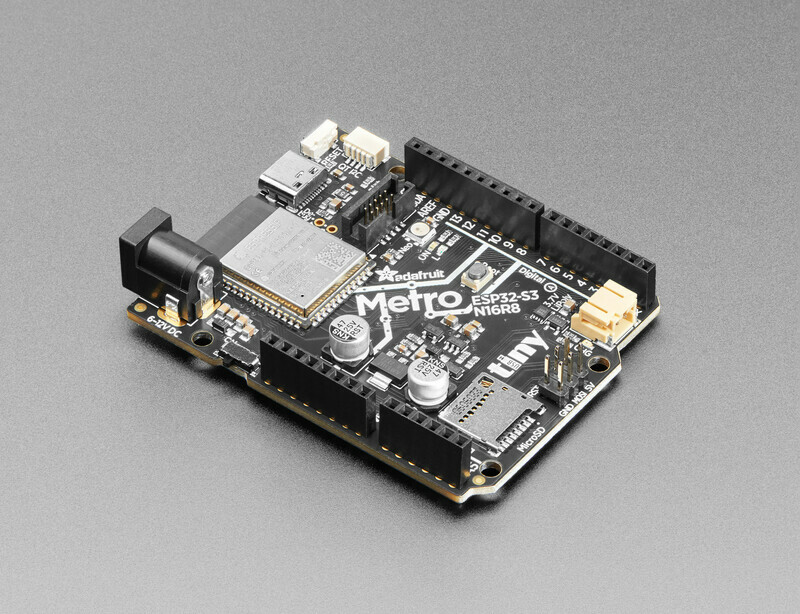

Specifications
Radiosinherited from ESP32-S3
- Wi-Fi
- Wi-Fi 4 · 2.4 GHz
- Bluetooth LE
- BLE 5
- Bluetooth Classic
- no
- 802.15.4
- no
USB
- Native USB
- yes
- Connector
- usb-c
- Bridge chip
- none — SoC native USB
Board
- Form factor
- metro
- Battery connector
- yes
- Charging
- yes
Display & extras
- Extras
- rgb-ledstemma-qt
Arduino Uno-form-factor ESP32-S3 board with native USB-C, 16 MB flash / 8 MB PSRAM, LiPoly charging, and STEMMA QT.
Firmware for this board
No firmware recipes yet — help add one.
Notes
- 16 MB flash, 8 MB Octal PSRAM, 512 KB SRAM
- LiPoly battery connector with built-in charging; MAX17048 I2C battery monitor
- STEMMA QT connector with switchable power; JTAG 2x5 debug header; Revision B (Nov 2023) fixed NeoPixel/SPI/SD-card pin conflicts with PSRAM
- Dimensions not specified on the product page (omitted)
- io.power_out QUOTED: vendor page states "This is the output pin from the 3.3V regulator, you can grab up to 400mA from this regulator for accessories, it's also used by the ESP32-S3 which can have spiky current draw."
- io.gpio_exposed=25 QUOTED: vendor pinouts page lists RX/TX (D0/D1), D2-D13 (12 digital pins), A0-A5 (6 analog), SCL/SDA (I2C), and SCK/MOSI/MISO (ICSP header) = 25 GPIO-capable pads. io.gpio_free=24 DERIVED: cross-referencing the vendor firmware repo's own CircuitPython board pin-definition (pins.c) maps every header pad to a GPIO -- of esp32-s3's soc.reserved_pins, only GPIO3 (D3, strapping) is exposed; the onboard MicroSD slot shares the same ICSP SCK/MOSI/ MISO bus (not exclusive) but its SD_CS (GPIO45, itself strapping) is a dedicated internal signal with no header pad, and NeoPixel (GPIO46) is likewise off-header -- so 25 - 1 = 24
- usb_serial derived from usb.bridge (native) + soc usb.type otg-full-speed + serial-jtag
Verify my board
Reads the connected chip over USB and checks it against what esp-atlas cites for Adafruit Metro ESP32-S3 (16MB Flash 8MB PSRAM) — over Web Serial, no backend, nothing leaves your browser.
In-browser verify needs Web Serial: Chrome or Edge on a desktop. Safari, Firefox and phones cannot do it.
Serial monitor
Not connected.