Inkplate 10
Board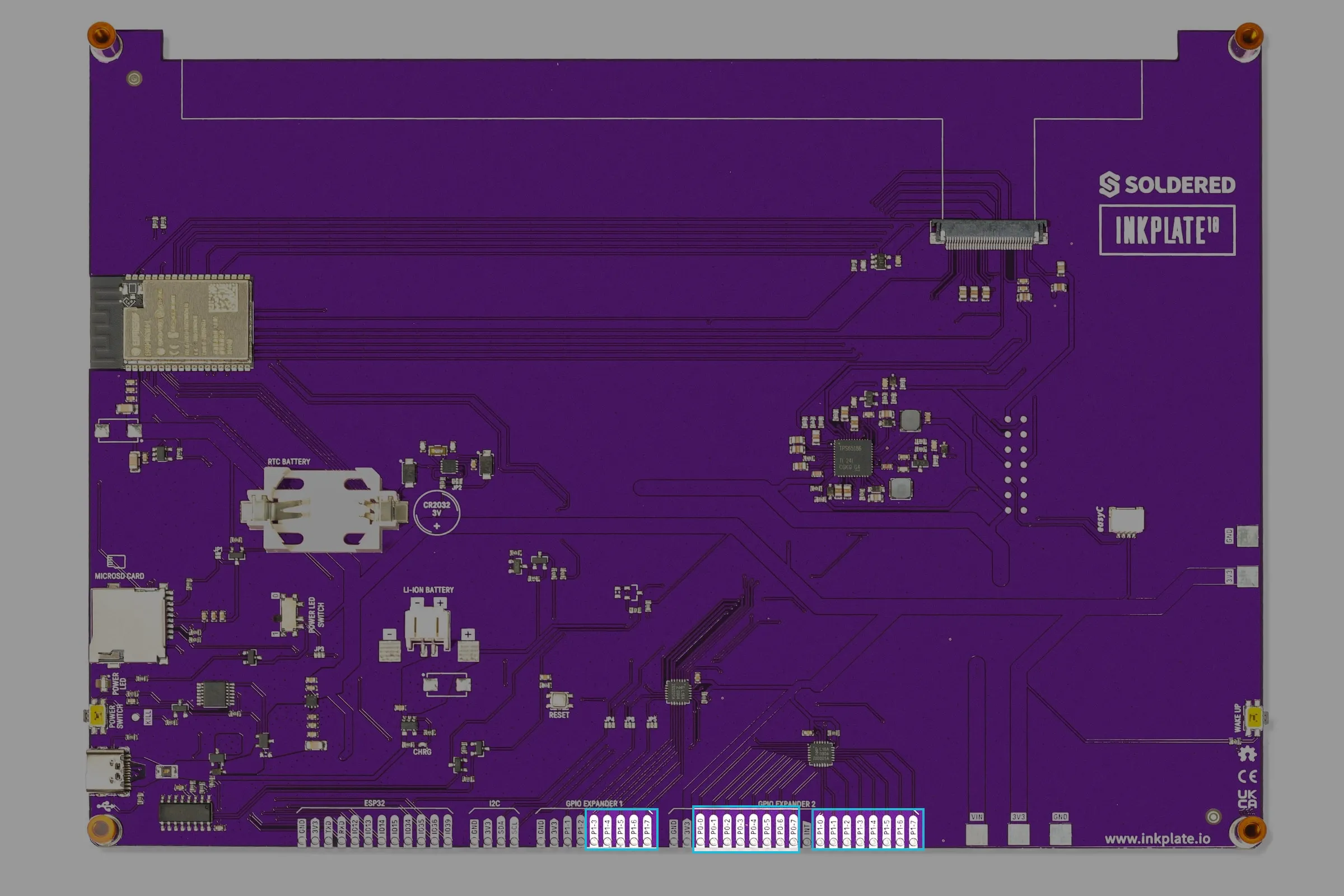
Specifications
Radiosinherited from ESP32
- Wi-Fi
- Wi-Fi 4 · 2.4 GHz
- Bluetooth LE
- BLE 4.2
- Bluetooth Classic
- yes
- 802.15.4
- no
USB
- Native USB
- no
- Connector
- usb-c
Board
- Form factor
- inkplate
- Dimensions
- 224.3 × 163 × 10 mm
- Battery connector
- yes
- Charging
- yes
Display & extras
- Display
- 9.7in 1200x825 greyscale E-Ink
- Extras
- e-inksd-cardrtc
An ESP32 board driving a 9.7in 1200x825 greyscale e-paper panel, with a microSD slot, RTC, USB-C, and Li-ion battery charging onboard — Arduino (Adafruit GFX) and MicroPython compatible.
Firmware for this board
Known good
- ESPHomeKnown goodweb flasher
Flash ESPHome
Known good esp-atlas asserts this board↔firmware link at the shown trust tier — it does not guarantee your specific unit or the current firmware version. Flashing can erase keys/config and can brick the device. At your own risk.
Notes
- 22 uA deep-sleep current
- RTC has its own battery holder
- Official BOM lists a plain ESP32-WROVER module (4 MB flash, 8 MB PSRAM per Espressif's ESP32-WROVER datasheet), needed for the grayscale framebuffer
- io.gpio_free=1 DERIVED, not quoted (SPEC-io-power.md §5.3). Vendor free-GPIO page states the Inkplate 10 pins "not connected to any external component": IO26 (native ESP32), plus GPIO expander 1 P1-3..P1-7 and expander 2 P0-0..P1-7 (21 more I/O on the separate PCAL6416A I2C expander, excluded here -- not native SoC GPIO pads). Of the native set {IO26}, none fall in esp32's reserved_pins (strapping {0,2,5,12,15}, input_only {34,35,36,39}, usb_flash_tied {6,7,8,9,10,11}), so 1 - 0 = 1. Math not vendor-stated; verify before treating as exact.
Verify my board
Reads the connected chip over USB and checks it against what esp-atlas cites for Inkplate 10 — over Web Serial, no backend, nothing leaves your browser.
In-browser verify needs Web Serial: Chrome or Edge on a desktop. Safari, Firefox and phones cannot do it.
Serial monitor
Not connected.