LOLIN S2 mini
Board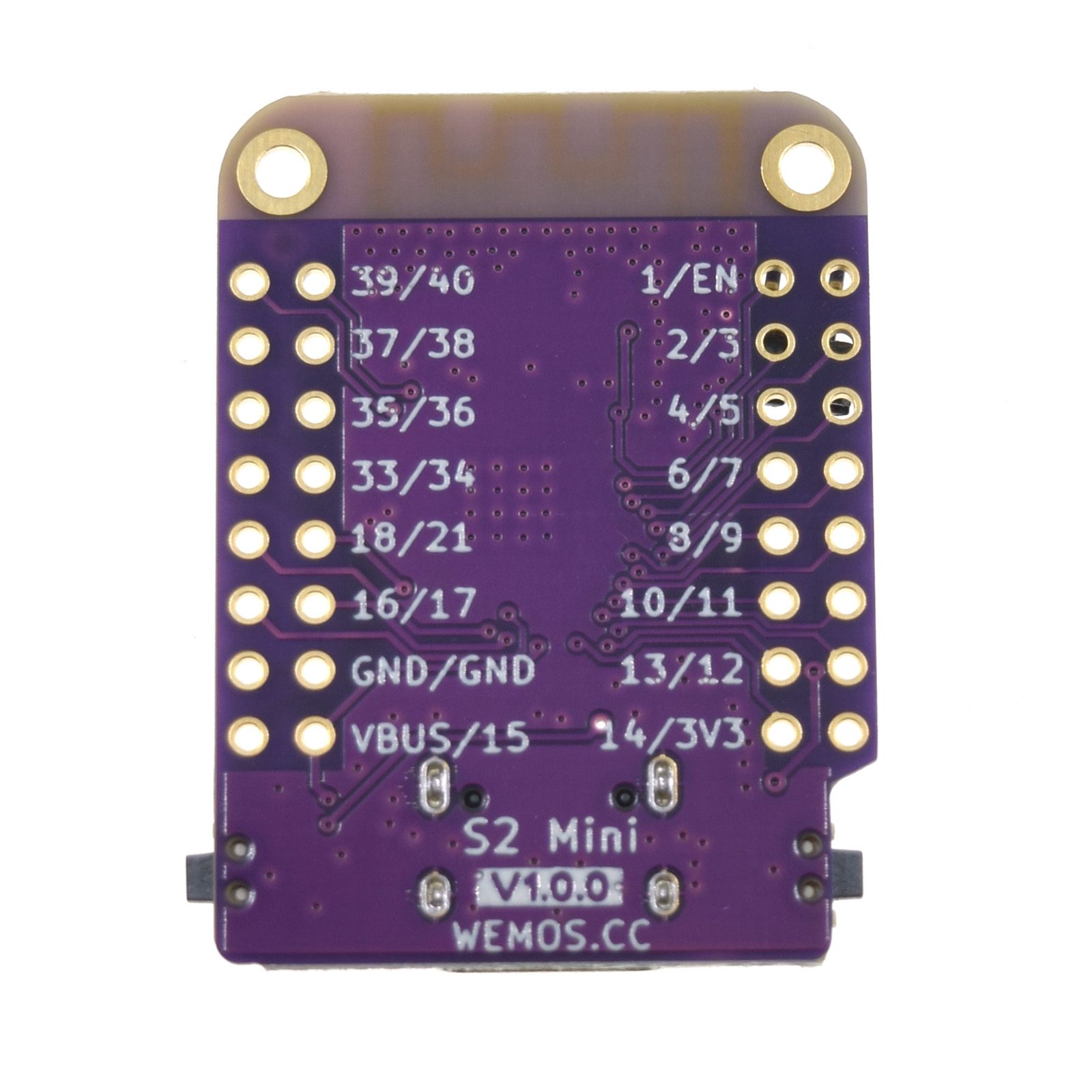
Specifications
Radiosinherited from ESP32-S2
- Wi-Fi
- Wi-Fi 4 · 2.4 GHz
- Bluetooth LE
- none
- 802.15.4
- no
USB
- Native USB
- yes
- Connector
- usb-c
Board
- Form factor
- lolin-mini
- Dimensions
- 34.3 × 25.4 mm
Thumb-sized bare-S2 board: ESP32-S2FN4R2 (4 MB flash, 2 MB PSRAM), USB-C, 27 IO, D1-mini-shield compatible footprint.
Firmware for this board
Known good
- WLEDKnown goodweb flasher
Flash WLED
Known good esp-atlas asserts this board↔firmware link at the shown trust tier — it does not guarantee your specific unit or the current firmware version. Flashing can erase keys/config and can brick the device. At your own risk.
Unverified
- NerdMiner v2Unverified
Flash NerdMiner v2
Unverified esp-atlas asserts this board↔firmware link at the shown trust tier — it does not guarantee your specific unit or the current firmware version. Flashing can erase keys/config and can brick the device. At your own risk.
Notes
- Based on ESP32-S2FN4R2; 4 MB flash, 2 MB PSRAM
- 27x digital I/O pins
- Pin-compatible with LOLIN D1 mini shields
- io.gpio_exposed=27 QUOTED: vendor page states "27x IO" (Features) and "Digital I/O Pins | 27" (Technical specs table); no enumerated GPIO pin-list/table is published in the spec table, so power_out is omitted
- io.gpio_free=27 DERIVED: the vendor's own labeled pinout diagram (s2_mini_v1.0.0 silkscreen photo) enumerates exactly 27 header GPIO pads (1-18, 21, 33-40) -- matching the "27x IO" spec exactly. Of esp32-s2's soc.reserved_pins, strapping 0/45/46 and usb_flash_tied 19/20 are all absent from this pad list (GPIO19/20 are consumed internally by the board's native USB-C, and 45/46 by internal flash-voltage strapping), and the 2 MB PSRAM (ESP32-S2FN4R2, in-package) uses GPIO27-32 (SPI0 bus) which are likewise absent from the header -- so no reserved or onboard-consumed pin lands on an exposed pad: 27 - 0 = 27
Verify my board
Reads the connected chip over USB and checks it against what esp-atlas cites for LOLIN S2 mini — over Web Serial, no backend, nothing leaves your browser.
In-browser verify needs Web Serial: Chrome or Edge on a desktop. Safari, Firefox and phones cannot do it.
Serial monitor
Not connected.