NanoC6
BoardAlso known as: m5stack_nanoc6
Specifications
Radiosinherited from ESP32-C6
- Wi-Fi
- Wi-Fi 6 · 2.4 GHz
- Bluetooth LE
- BLE 5.3
- Bluetooth Classic
- no
- 802.15.4
- Zigbee 3.0, Thread 1.3, Matter
USB
- Native USB
- yes
- Connector
- usb-c
Board
- Form factor
- m5-nano
- Dimensions
- 23.5 × 12 × 9.5 mm
Display & extras
- Extras
- rgb-led
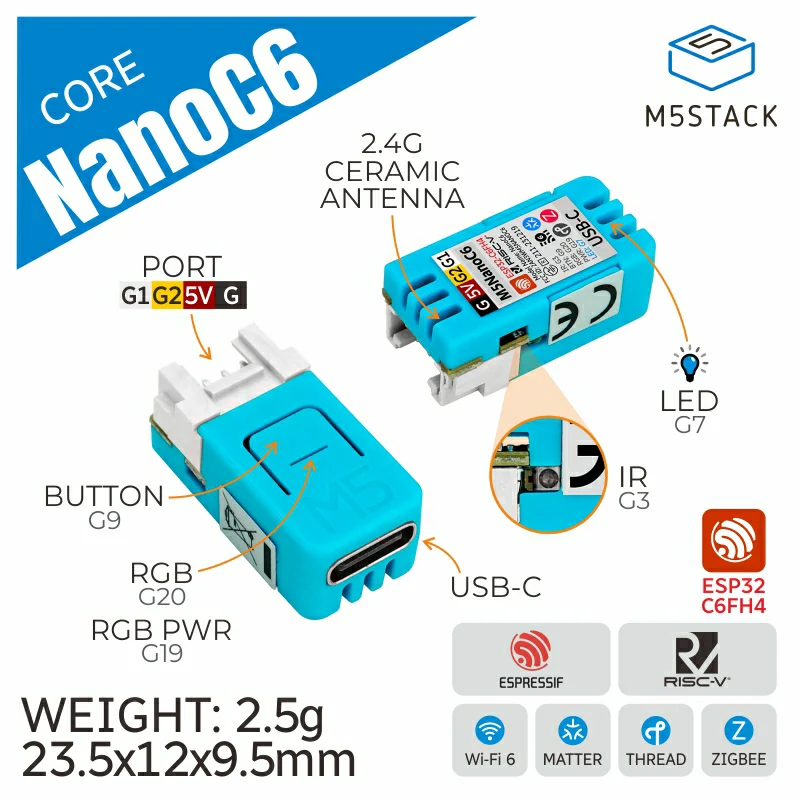
23.5x12mm ESP32-C6 nano unit: programmable RGB LED, IR transmitter, Grove port, USB-C.
Firmware for this board
Reported
- ESPHomeReportedweb flasher
Flash ESPHome
Reported esp-atlas asserts this board↔firmware link at the shown trust tier — it does not guarantee your specific unit or the current firmware version. Flashing can erase keys/config and can brick the device. At your own risk.
Unverified
- ESP32 MarauderUnverifiedrelease .bin
Flash ESP32 Marauder
Unverified esp-atlas asserts this board↔firmware link at the shown trust tier — it does not guarantee your specific unit or the current firmware version. Flashing can erase keys/config and can brick the device. At your own risk.
Notes
- ESP32-C6FH4; 4 MB flash
- WS2812 programmable RGB LED, IR transmitter, button on GPIO9, Grove interface, ceramic antenna, no onboard battery
- ESP32-C6 has no PSRAM interface at all (chip datasheet lists no PSRAM/external-RAM support)
- io.power_out QUOTED: vendor page states "Grove Maximum Output Current: DC 5V@600mA (depends on USB supply)"
- io.gpio_free=2 DERIVED, not quoted (SPEC-io-power.md §5.3). The vendor pinmap page states only one user-facing expansion connector, the HY2.0-4P Grove port (G2, G1) -- the other named pins (G3/G20 IR, G19 RGB+EN, G9 button, G7 LED) are hard-consumed by onboard peripherals, not free header pins. Subtracting esp32-c6's soc.reserved_pins that are exposed on the Grove pair -- strapping {8,9,10,11,15} and usb_flash_tied {12,13}, neither of which is G1 or G2 -- leaves both pads free: 2 - 0 = 2. Math not vendor-stated; verify before treating as exact.
Verify my board
Reads the connected chip over USB and checks it against what esp-atlas cites for NanoC6 — over Web Serial, no backend, nothing leaves your browser.
In-browser verify needs Web Serial: Chrome or Edge on a desktop. Safari, Firefox and phones cannot do it.
Serial monitor
Not connected.